The same, but different. Why revisiting old ideas can be one of the smartest marketing moves you’ll ever make.
Smart marketing ideas don’t age. They evolve.
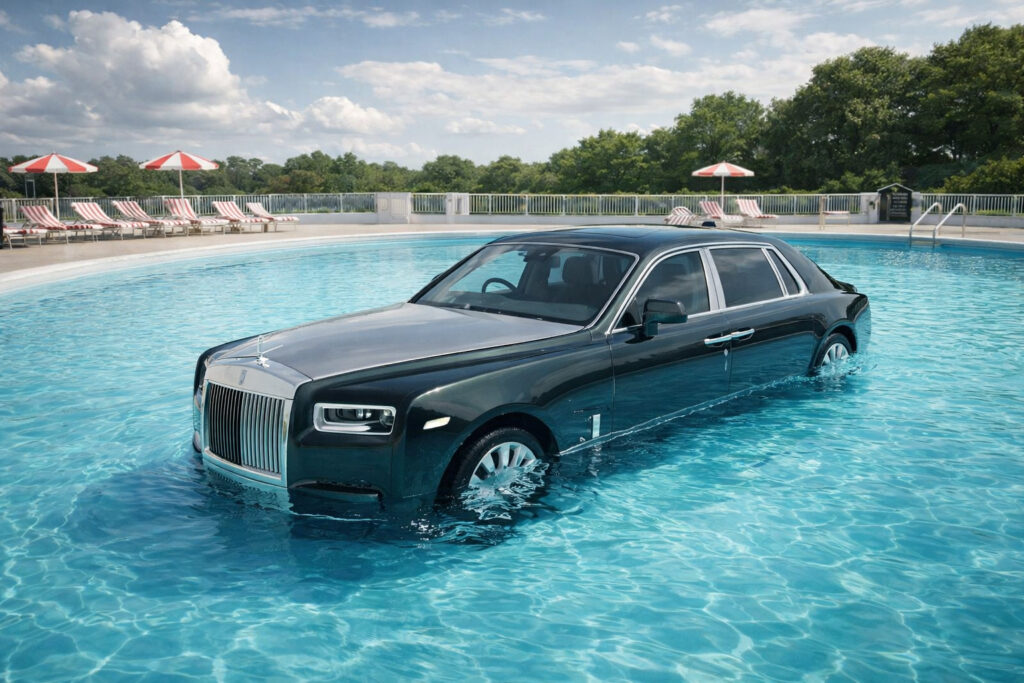
The recent stunt by Rolls-Royce – submerging a Phantom in a swimming pool – isn’t just an extravagant publicity moment. It‘s a masterclass in how old ideas, when reinterpreted with intent, can feel completely new again.
This isn’t nostalgia for nostalgia’s sake. It’s about cultural memory, brand storytelling, and strategic reuse – lessons that apply just as much to everyday businesses as they do to the world’s most prestigious brands. Are you making the smartest marketing moves?
Why this story that refuses to sink. Moon created the myth!
This revisited concept comes from rock folklore. Legend has it that Keith Moon, drummer of The Who, rolled a car into a swimming pool during his 21st birthday celebrations in 1967. Depending on who you ask, the car was a Lincoln Continental… or possibly no car at all.
Eyewitness accounts contradict each other. Moon himself later admitted the details were hazy. But here’s the crucial point: The truth doesn’t matter!
The image – a luxury car in a swimming pool – became shorthand for rock ’n’ roll excess. Reckless. Absurd. Larger than life. Over time, the story sharpened into myth, and in popular memory, the Lincoln quietly transformed into something even more symbolic: a Rolls-Royce. That image stuck.
The first reinvention: Oasis turns it into a statement!
Thirty years later, the legend resurfaced – this time as iconography.
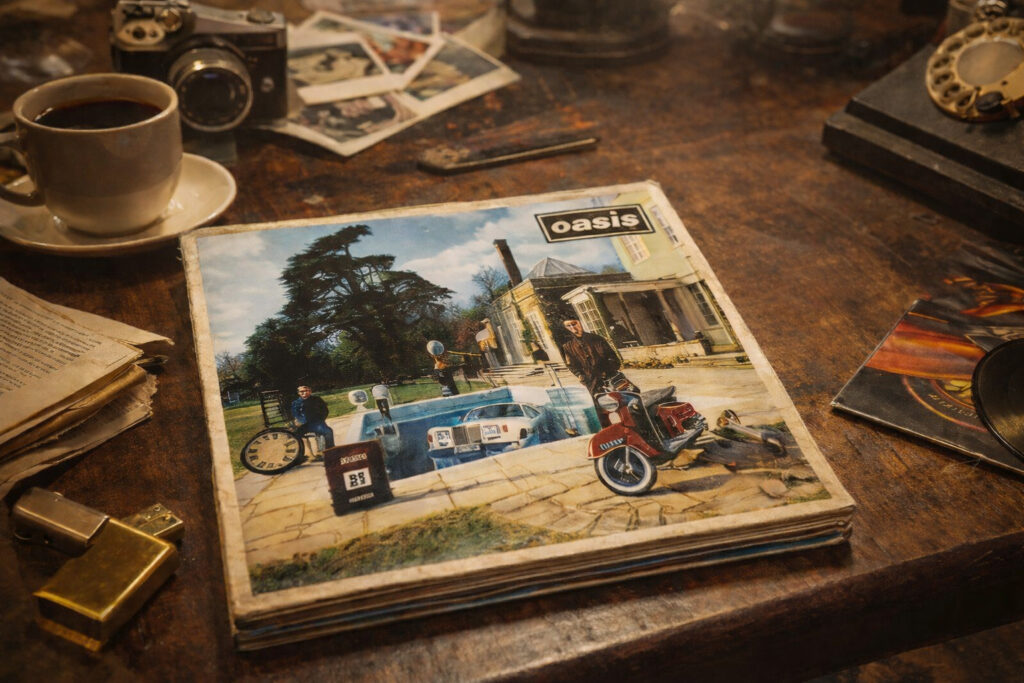
In 1997, Oasis released their third album, Be Here Now, featuring a partially submerged Rolls-Royce Silver Shadow on the cover. Shot at Stocks House in Hertfordshire, the image was a deliberate nod to the Keith Moon swimming-pool myth.
The timing mattered. Oasis were at the absolute height of their fame. The album was bigger, louder, longer and more expansive than anything they’d released before, and the artwork mirrored that mindset perfectly. Even if you were too young to know the Moon story in detail, you recognised the feeling it conveyed straight away – confidence, ambition, scale, and the reality that the band operates on their own terms.
For a generation, Be Here Now became the definitive visual expression of the myth. Not copied. Reinterpreted.
The modern chapter: Rolls-Royce makes it legendary!
Fast-forward again – and Rolls-Royce completes the circle.
To mark 100 years of the Phantom, and timed with what would have been Keith Moon’s 79th birthday, Rolls-Royce submerged a Phantom Extended Wheelbase into the outdoor pool at Tinside Lido.
This time, there was no ambiguity. There really was a Rolls-Royce in a swimming pool.
Crucially, it wasn’t a customer car. The brand used a retired prototype, already destined for recycling – allowing them to honour the myth without destroying a production vehicle. The location added another layer of meaning too: Tinside Lido is an Art Deco landmark with 1960s cultural connections, including links to The Beatles during the Magical Mystery Tour era.
For locals, media and social platforms alike, the sight was surreal, confusing, and utterly unforgettable.
Mission accomplished.
This is not repetition: This is reinforcement!
Rolls-Royce didn’t invent the idea. They legitimised it.
By physically recreating an image that previously existed only as folklore and album art, the brand:
- Connected automotive heritage with music mythology
- Reinforced its long-standing association with cultural icons
- Demonstrated how a familiar idea can be re-presented with authority, intent and relevance
For anyone encountering this story for the first time, the pool-bound Phantom isn’t a random spectacle – it’s the third chapter in a visual narrative nearly 60 years in the making.
That’s why it works!
The smartest marketing moves: Why reusing old ideas works so well in marketing.
1. Familiarity builds trust faster than novelty alone
Audiences don’t start from zero. When an idea already exists in the cultural subconscious, it carries emotional equity. Recognition creates comfort. Comfort creates attention.
That’s why the Rolls-Royce image lands instantly – you feel it before you analyse it.
2. Reinterpretation signals confidence, not laziness
There’s a difference between recycling and re-authoring.
- Keith Moon created the myth.
- Oasis turned it into a statement.
- Rolls-Royce made it legendary.
Each added context, relevance and scale for its time. That’s creative confidence.
3. Cultural anchors make campaigns shareable
Campaigns don’t travel because they’re clever. They travel because they’re anchored to something people already care about – music, icons, myths, shared memories.
You don’t need a £500k car. You need a story with roots.

Old concepts are often your strongest asset
From a content and SEO perspective, this approach is powerful. Revisiting proven ideas allows brands to:
- Refresh high-performing themes with new relevance
- Build topical authority instead of chasing trends
- Extend keyword clusters and narrative depth
- Strengthen long-term visibility through continuity
Search engines – like audiences that reward depth, authority and coherence, not constant reinvention.
What this means for everyday businesses
What this means for your business is that success doesn’t require a massive PR budget, or even a globally recognised brand. Instead, what matters is having an awareness of what has already worked in the past, the confidence to revisit those ideas, and the confidence to reinterpret the creative concepts for today’s audience.
Before launching your next campaign, it’s worth asking a few important questions. What stories already exist around our brand? Which ideas have resonated most deeply with our audience? And how could we tell those stories again in a way that feels both familiar and fresh?
Sometimes the smartest way to move forward is to look back with intention. The idea may be the same, but the lens can be new and the relevance refreshed. That isn’t playing it safe – it’s playing it smart. Same idea. Fresh relevance.
Revisiting old ideas: One of the smartest marketing moves!
The recent stunt by Rolls-Royce – submerging a Phantom in a swimming pool – isn’t just an extravagant publicity moment. It’s a masterclass in how old ideas, when reinterpreted with intent, can feel completely new again.
This isn’t nostalgia for nostalgia’s sake. It’s about cultural memory, brand storytelling, and strategic reuse – lessons that apply just as much to everyday businesses as they do to the world’s most prestigious brands. Some marketing ideas don’t age. They evolve.
Have a story worth telling?
The smartest marketing moves rarely start from nothing. It starts from insight.
If you’re looking for help with creative campaigns, brand narratives or marketing ideas that resonate with people and travel further and longer, we are always open to new projects and collaborations.
#MarketingStrategy #BrandStorytelling #CreativeMarketing
